Choosing Your Next Confocal: What Experts Look For—and Why It Matters
Dr. Boris Zarda
Advanced Workflow Manager, Leica Microsystems
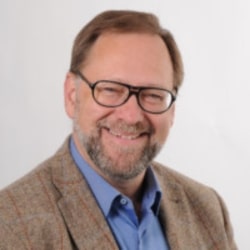
Read BioBoris Zarda is trained as a microbiologist and brings over 30 years of experience across a wide range of fluorescence microscopy techniques. He has been with Leica Microsystems for 28 years and is a member of the Advanced Workflow Specialist (AWS) team, where he is responsible for scientific collaborations. The close connection of Boris and the AWS team to real-world scientific research uniquely positions them to consult with scientists and tailor microscope systems to specific scientific needs. Boris is deeply committed to optimizing imaging techniques and workflows and strongly believes in knowledge sharing as a key driver for improving research outcomes.
Close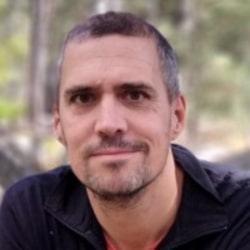
Dr. Florian Müller
Interim Head of the Photonic BioImaging (PBI) Platform and Head of the Quantitative RNA Imaging Group, Institut Pasteur, Paris
Read BioFlorian Müller is a biophysicist with a career centered on developing methodologies that combine advanced fluorescence imaging, computerized image analysis, and mathematical modeling to investigate cellular processes. He earned his Ph.D. through a joint program between the Graz University of Technology and the NIH. After his postdoc at ENS Paris and Institut Pasteur, became a staff scientist in 2013, focusing on quantitative transcription regulation. His current research is in single‑molecule RNA imaging and using automated workflows to study RNA biogenesis and spatial transcriptomics.
Close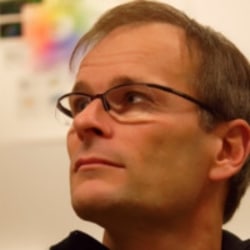
Dr. Urs Ziegler
Head of Facility, Center for Microscopy and Image Analysis | University of Zurich
Read BioUrs Ziegler is a biochemist with more than 20 years of experience in advanced microscopy and quantitative imaging. His expertise spans light and volume EM, live cell and model organism imaging, multiparametric microscopic imaging, and cryo electron microscopy. He applies cutting-edge imaging strategies to address complex questions in the fields of cell biology, neurobiology, and developmental biology. Urs also has extensive experience in core facility management with a focus on technology development, user training, and advanced imaging workflows for the scientific community.
Close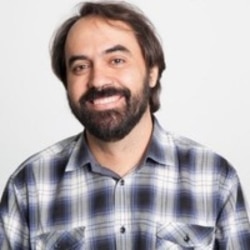
Dr. Diego Megias
Head of Advanced Microscopy Facility, Instituto de Salud Carlos III, Madrid
Read BioDiego Megías is a Senior Scientist leading the Advanced Microscopy Platform and coordinating the Instituto de Salud Carlos III’s scientific technical infrastructures. With a PhD in Biology and >20 years experience in microscopy and biomedical imaging, he previously directed the Confocal Microscopy Unit at the Spanish National Cancer Research Centre. He specializes in advanced image acquisition, analysis, and high throughput microscopy. He is an active member of microscopy and imaging networks, has organized numerous training activities, and his units have been recognized as reference centers by major manufacturers. He has also supervised a PhD thesis, mentored many students, and taught microscopy and imaging as an adjunct professor.
CloseLearn how to navigate confocal microscopy technologies and trade-offs like performance, flexibility, and scalability to choose a system that supports both current experiments and long-term research goals.
What You Will Learn:
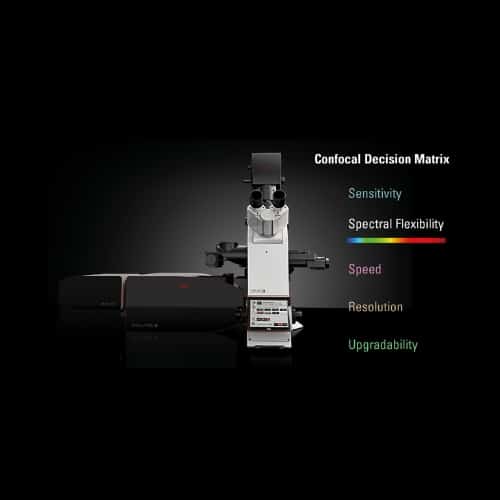
- How to identify the essential performance criteria—including resolution, sensitivity, dynamic range, and imaging speed—to ensure your system is suited to your current biological questions.
- How spectral flexibility and advanced detection technologies influence signal quality, multiplexing capabilities, and your ability to work with challenging or dim samples.
- How to future-proof your investment by choosing a platform that supports modular upgrades and access to advanced imaging modalities such as lifetime imaging, spectral imaging, or multiplexed workflows.
Choosing the right confocal microscope is a pivotal decision that shapes the quality, efficiency, and future potential of your research. Yet with evolving imaging modalities, competing techniques, and rapidly advancing technologies, navigating the options can feel overwhelming.
This live round-table webinar brings together a distinguished panel of experts to discuss the key considerations in modern confocal microscopy. The webinar will be moderated by Dr Boris Zarda, Advanced Workflow Manager with over 30 years’ experience in multiple fluorescence microscopy techniques and nearly three decades at Leica Microsystems. Dr Zarda will bring a unique, practice-driven perspective, grounded in close collaboration with real-world scientific research.
The panel also features scientists and core facility leaders who are deeply involved in evaluating, operating, and advising on advanced confocal systems. These include Dr Florian Müller from the Institut Pasteur in Paris, Dr Urs Ziegler from the University of Zurich, and Dr Diego Megías from the Instituto de Salud Carlos III in Madrid. Each of these experts will contribute a distinct perspective from cutting-edge research and advanced facility management.
This live webinar is ideal for anyone engaged in fluorescence imaging or confocal-based research who wants to make more informed decisions about selecting the right system. Whether you are a cell biologist striving to improve image quality, a researcher exploring new confocal options, or a core facility specialist responsible for guiding instrument investments and training, this session offers valuable insights tailored to your needs.
It is equally relevant for principal investigators looking to future-proof their laboratory’s imaging capabilities, advanced users seeking a deeper understanding of performance criteria such as sensitivity, resolution, and spectral flexibility, as well as early career scientists eager to build a strong foundation in confocal microscopy. Anyone who wants to feel confident navigating the complexity of modern confocal platforms will benefit from joining this live discussion.
Learn directly from scientists who understand the challenges of selecting a system that balances current needs with future research ambitions.